Last week’s ANA Masters of Marketing in Orlando did not feel like a typical industry conference. It felt like a reset.
For six days, senior marketers, brand leaders, platform executives, and agency teams gathered around one central question: what does modern marketing need to become now that AI, fragmented media, and performance pressure are no longer future issues, but present ones? The answer that emerged over the week was clear. Marketing is not entering a new era gradually. It is already in it.
That tone was set early. The ANA Masters of Marketing 2025 was framed by the association itself as an event focused less on admiring past case studies and more on helping marketers make decisions for the year ahead. In its official preview, the ANA described the conference as a place to turn insights into action and help brands shape their 2026 growth strategies in real time. That positioning proved accurate. Across the agenda, the emphasis was on execution, alignment, and practical next steps rather than empty futurism. Sources: ANA press release, ANA 2025 conference agenda
The scale of the event reflected the weight of the moment. The speaker lineup included leaders from LVMH, the NFL, Procter & Gamble, Red Lobster, United Airlines, Adobe, Google, Meta, EY, and Qualcomm, among others. That mix made one thing obvious: the ANA is no longer just convening brand marketers. It is convening the broader operating system of modern marketing — where creativity, media, data, AI, measurement, and business strategy now overlap every day. Source: ANA press release
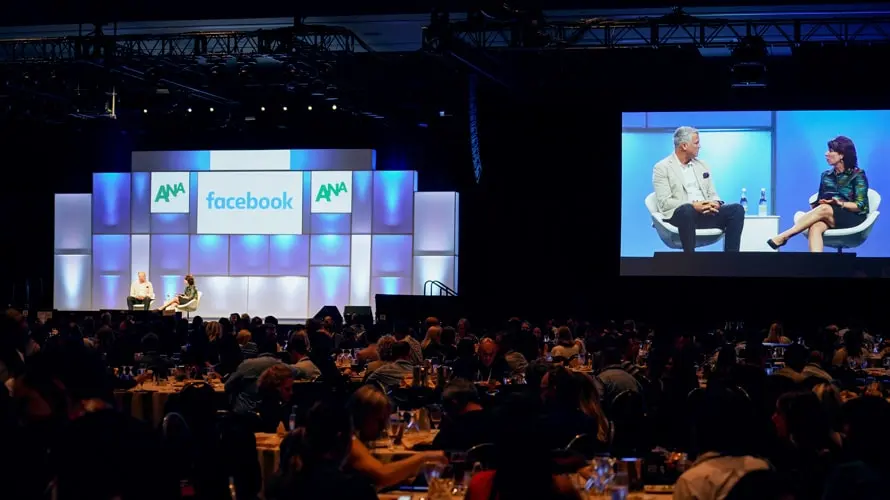
What made this year’s conference especially notable was its structure. The ANA introduced Accelerator Labs, encouraged CMOs to bring their teams and agency partners, and built the week around more collaboration and peer exchange. The format signaled a broader shift in the market. Marketing leaders are no longer looking only for inspiration from a stage. They want working models, sharper frameworks, and better tools for planning, budgeting, and execution. Source: ANA press release
If there was one dominant theme throughout the week, it was AI — but not in the usual overhyped way. At ANA this year, AI was treated less like a novelty and more like infrastructure. It showed up in conversations about media planning, data governance, creative development, team design, personalization, measurement, and growth strategy. That same mood came through in post-event coverage, with The Drum describing one of the biggest takeaways as the fact that “AI has moved into the foundations.” The message from Orlando was not that AI might reshape marketing one day. It was that the reshaping is already happening, and the only serious question now is how intelligently organizations respond. Sources: The Drum, ANA 2025 conference agenda
Just as important was the conference’s renewed insistence on accountability. Across the program, marketers were pushed to connect brand investment more directly to business impact. That theme surfaced in sessions on retail media, contextual CTV, omnichannel performance, measurement, marketing operations, and data maturity, all of which pointed to the same reality: modern marketing leaders are under intense pressure to prove that growth is measurable, repeatable, and commercially meaningful. This year’s ANA did not reject brand building; it insisted that brand building and performance thinking must now work together. Sources: ANA 2025 conference agenda, The Drum
One of the more talked-about ideas coming out of the week was the growing importance of relevance over reach. In its conference recap, The Drum highlighted the claim that locally targeted campaigns can outperform broad national ones by up to 40%, reinforcing a wider shift in how marketers think about precision, community, and effectiveness. That idea fit naturally with the rest of the agenda, where speakers repeatedly returned to the need for smarter targeting, cleaner data, and more useful systems — not simply more volume. Source: The Drum
A notable second-day moment, based on attendee details shared from the event, came from Minh Tran, lead programmer of DSL, who presented on what he described as the key structural problems inside the advertising ecosystems of Meta and Google. His talk focused on the idea that some of the limitations marketers face on those platforms are not purely technical constraints, but artificial limitations built into the systems themselves. In the context of a conference so heavily focused on transparency, measurement, and platform power, that message landed as a sharp counterpoint to the broader optimism around automation and AI. It also reflected one of the underlying tensions of the week: marketers increasingly depend on powerful platforms, while simultaneously questioning how much visibility and control those platforms actually allow.
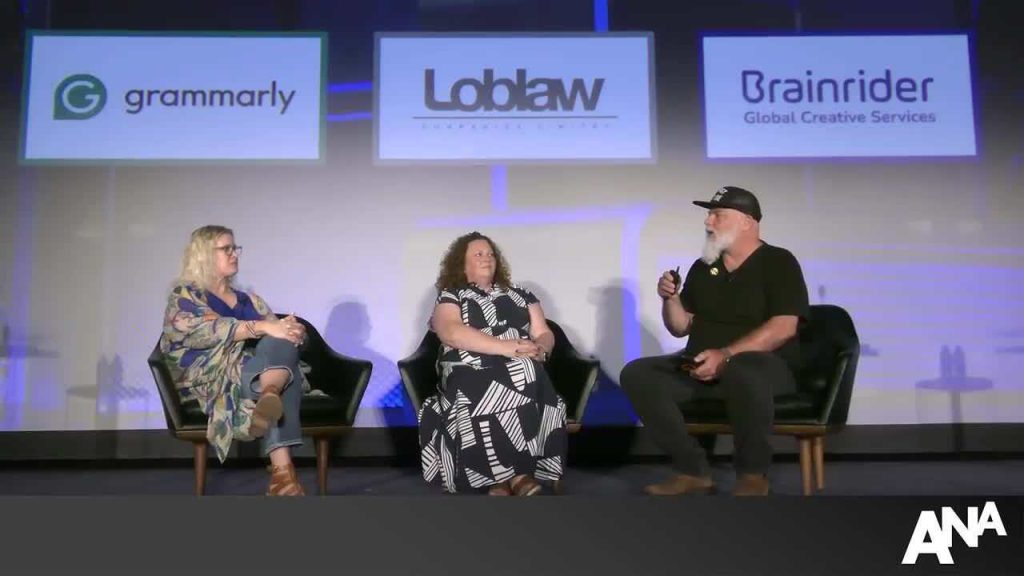
That tension may have been the real story of the conference. The mood in Orlando was not anti-technology. If anything, it was deeply engaged with technology. But it was also more mature than the industry’s AI conversation has often been elsewhere. Speakers and attendees seemed less interested in spectacle and more interested in tradeoffs: how to adopt AI without losing trust, how to automate without creating opacity, how to measure better without drowning in dashboards, and how to move faster without weakening the strategic core of the brand.
The significance of ANA Masters of Marketing also comes from the influence of the organization itself. The ANA says it represents more than 1,600 member companies, 20,000 brands, and $400 billion in annual marketing investment. That scale gives the conference importance beyond the ballroom. When the dominant conversations at ANA are about AI readiness, retail media, measurement discipline, team structure, and growth strategy, those themes do not stay at the conference. They move into boardrooms, planning cycles, agency briefs, and budget decisions across the industry. Source: ANA press release
In the end, what made last week’s ANA memorable was not one flashy announcement or one headline-grabbing keynote. It was the sense that the industry has stopped asking abstract questions and started confronting operational ones. Marketing is now being forced to grow up fast: to become more measurable without becoming mechanical, more automated without becoming generic, and more accountable without losing the creative instincts that make brands matter in the first place.
That was the real message from Orlando. The next era of marketing is no longer about possibility. It is about capability.


0 Comments